
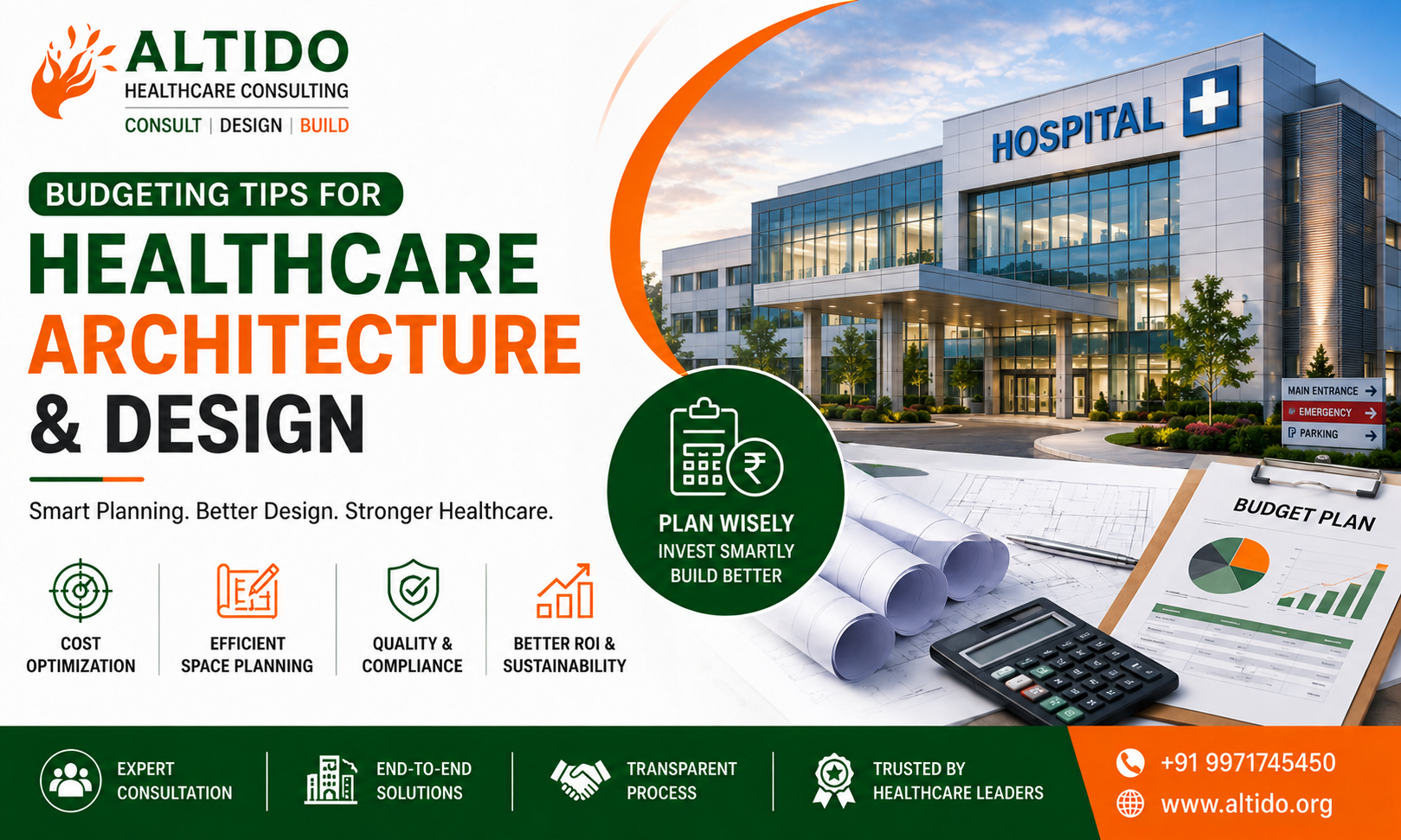
Designing a healthcare facility is one of the most complex and capital-intensive investments. Whether it’s a multi-specialty hospital, clinic, or diagnostic center, proper budgeting is critical to ensure long-term success. A well-planned budget not only controls costs but also ensures quality, compliance, and operational efficiency.
At Altido Healthcare Consulting, we help healthcare investors, doctors, and organizations plan cost-effective and future-ready healthcare infrastructure. In this blog, we’ll explore practical budgeting tips for healthcare architecture and design that can help you optimize your investment while maintaining high standards.
People Also Like to read this: Best Hospital Architects in India: Designing Advanced Healthcare Infrastructure
Why Budgeting is Crucial in Healthcare Projects
Healthcare projects involve multiple components—architecture, engineering, medical equipment, compliance, and operational planning. Without a structured budget, projects often face:
- Cost overruns
- Delays in construction
- Compromised quality
- Inefficient layouts
- Regulatory issues
A strong budgeting strategy ensures that every rupee is spent wisely while maintaining functionality and safety.
1. Start with a Detailed Feasibility Study
Before beginning design or construction, conduct a hospital feasibility study. This step helps determine:
- Market demand
- Target patient segment
- Required bed capacity
- Financial viability
- Expected return on investment
A feasibility study prevents over-investment and helps align your budget with realistic goals.
2. Define Clear Project Scope
One of the biggest reasons for budget overruns is unclear project scope. Define:
- Type of hospital (multi-specialty, single specialty, clinic)
- Number of beds
- Departments and services
- Level of technology and equipment
- Future expansion plans
Clear scope helps architects and consultants plan efficiently and avoid unnecessary costs.
3. Choose the Right Healthcare Architect
Hiring experienced professionals is essential. A skilled healthcare architect ensures:
- Efficient space utilization
- Optimized layouts
- Reduced construction waste
- Cost-effective material selection
Working with a specialized firm like Altido Healthcare Consulting helps you avoid design errors that can lead to expensive corrections later.
4. Focus on Smart Space Planning
Space planning directly impacts construction and operational costs.
Tips:
- Avoid oversized corridors and waiting areas
- Optimize department adjacencies
- Plan shared resources where possible
- Ensure smooth patient and staff flow
Efficient layouts reduce both initial construction costs and long-term operational expenses.
5. Plan for Medical Equipment Early
Medical equipment is a major cost component in healthcare projects. Poor planning can lead to:
- Space redesign
- Structural changes
- Increased installation costs
Best Practice:
- Finalize equipment list during design phase
- Coordinate with architects and engineers
- Allocate proper space and utility requirements
This ensures smooth installation and avoids costly modifications.
6. Optimize MEP (Mechanical, Electrical, Plumbing) Systems
MEP systems are critical but expensive.
Budgeting Tips:
- Use energy-efficient HVAC systems
- Plan centralized utilities
- Avoid overdesigning systems
- Ensure proper load calculations
Efficient MEP planning reduces both capital expenditure and ongoing operational costs.
7. Prioritize Compliance from the Start
Healthcare facilities must comply with regulations such as NABH and local authority approvals.
Ignoring compliance can result in:
- Penalties
- Redesign costs
- Project delays
Include compliance costs in your initial budget to avoid surprises later.
8. Use Cost-Effective Materials
Material selection plays a major role in overall budget.
Smart Choices:
- Durable and low-maintenance materials
- Infection-resistant surfaces
- Locally available materials to reduce transportation costs
Avoid unnecessary luxury finishes unless required for premium facilities.
9. Plan for Future Expansion
Many hospitals expand within a few years of operation.
Budgeting Strategy:
- Design scalable infrastructure
- Keep provisions for vertical or horizontal expansion
- Avoid redesign costs in the future
Future-ready design saves significant investment in the long run.
10. Adopt a Phased Development Approach
If budget constraints exist, consider phased construction.
Benefits:
- Lower initial investment
- Faster project launch
- Revenue generation before full expansion
This approach is ideal for startups and growing healthcare businesses.
11. Monitor Costs During Execution
Budgeting doesn’t end at planning—it must be monitored throughout the project.
Key Actions:
- Regular cost tracking
- Vendor comparison
- Avoid unnecessary design changes
- Strict project management
Proper monitoring ensures the project stays within budget.
12. Work with Turnkey Healthcare Consultants
Managing multiple vendors can increase costs and coordination challenges.
A turnkey consultant like Altido Healthcare Consulting offers:
- End-to-end project management
- Cost optimization strategies
- Better coordination between teams
- Faster project completion
This reduces both financial and operational risks.
13. Balance Cost with Quality
Cutting costs blindly can lead to poor infrastructure, higher maintenance, and patient dissatisfaction.
Smart Approach:
- Invest in critical areas (ICU, OT, MEP systems)
- Optimize non-critical areas
- Focus on long-term value rather than short-term savings
A balanced approach ensures sustainability and better ROI.
Common Budgeting Mistakes to Avoid
- Underestimating project costs
- Ignoring hidden expenses
- Frequent design changes
- Poor contractor selection
- Lack of professional guidance
Avoiding these mistakes can save significant time and money.
How Altido Healthcare Consulting Helps
At Altido Healthcare Consulting, we specialize in cost-effective healthcare planning and design.
Our Expertise Includes:
- Hospital feasibility studies
- Budget planning and cost optimization
- Architecture and layout design
- Medical equipment planning
- Turnkey hospital setup solutions
We ensure that your healthcare project is financially viable, operationally efficient, and future-ready.
Conclusion
Budgeting is the backbone of successful healthcare architecture and design. With proper planning, expert guidance, and smart decision-making, you can build a high-quality healthcare facility within your budget.
By following these budgeting tips, you can avoid costly mistakes, improve efficiency, and ensure long-term success.
If you’re planning a hospital or healthcare project, partner with Altido Healthcare Consulting to create cost-effective, compliant, and modern healthcare infrastructure that delivers real value.