
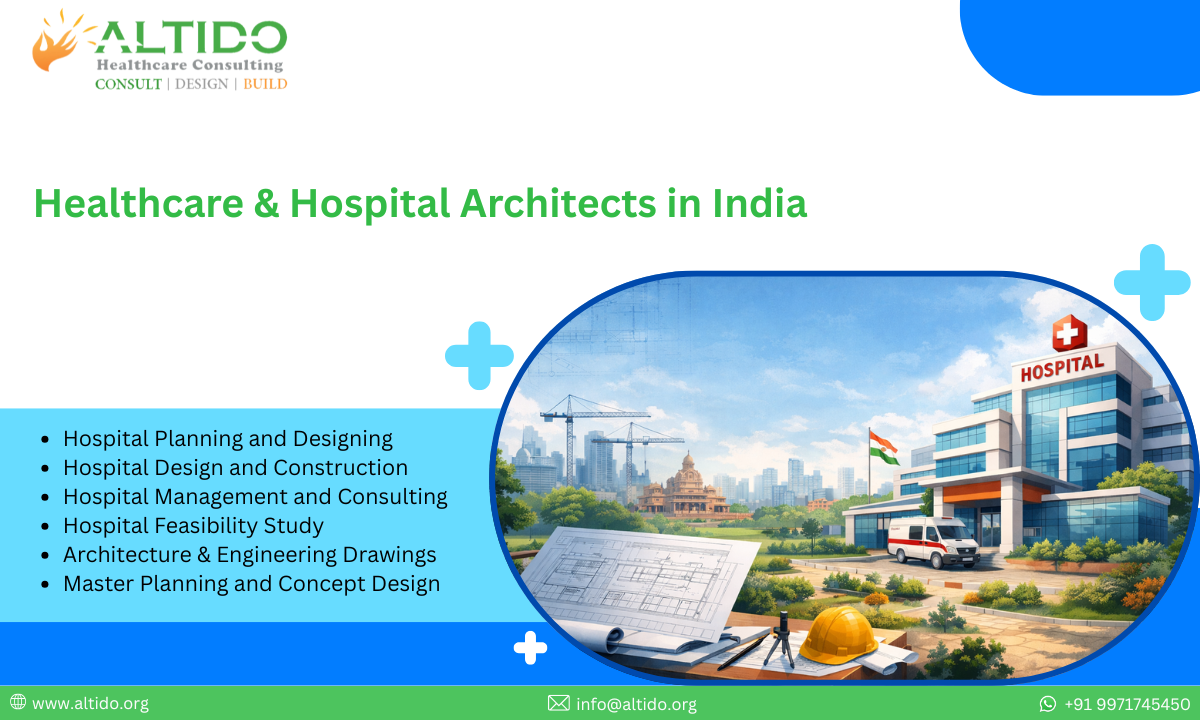
India’s healthcare sector is witnessing rapid transformation. With increasing demand for quality medical services, rising population, government healthcare initiatives, and private sector investments, the need for well-designed hospitals has never been greater. At the heart of this transformation lies a critical discipline — healthcare and hospital architecture.
Healthcare architecture is not just about constructing buildings. It is about designing healing environments that improve patient outcomes, enhance operational efficiency, ensure regulatory compliance, and create sustainable healthcare ecosystems. In India, where healthcare delivery varies across urban and rural settings, hospital architects play a vital role in shaping the future of medical infrastructure.
People Also Like to read this: New Hospital Project Consulting: A Complete Guide to Successful Healthcare Infrastructure Development
The Growing Need for Specialized Hospital Architects in India
Unlike residential or commercial buildings, hospitals are highly complex structures. They must accommodate advanced medical technologies, strict hygiene standards, patient safety protocols, and smooth workflow between departments.
India’s healthcare infrastructure is expanding across:
- Multi-specialty hospitals
- Super-specialty hospitals
- Day-care surgical centers
- Diagnostic centers
- Medical colleges and teaching hospitals
- Rural and community healthcare centers
Each facility requires specialized planning to ensure efficiency, safety, and scalability.
Healthcare architects in India must understand:
- NABH and statutory compliance requirements
- Infection control planning
- Patient-centric design principles
- Medical equipment integration
- Emergency and disaster planning
- Sustainable and green building concepts
Without expert planning, hospitals can face operational inefficiencies, higher maintenance costs, and compromised patient experiences.
Key Elements of Hospital Architecture
1. Functional Planning & Zoning
A hospital must be designed with intelligent zoning to separate:
- Emergency and trauma areas
- Outpatient departments (OPD)
- Inpatient wards
- Operation theatres
- Intensive care units
- Diagnostic imaging areas
- Administrative blocks
Proper zoning ensures smooth patient movement, reduced cross-infection risks, and optimized staff workflow.
2. Patient-Centric Design
Modern hospital architecture prioritizes patient comfort and emotional well-being. This includes:
- Natural lighting
- Noise reduction
- Clear wayfinding systems
- Comfortable waiting areas
- Healing landscapes
Studies show that well-designed environments reduce stress and promote faster recovery.
3. Infection Control & Safety
Post-pandemic healthcare infrastructure demands stricter infection control measures, such as:
- Separate air-handling units (AHU)
- Isolation rooms with negative pressure
- Dedicated clean and dirty corridors
- Sterile material flow planning
Healthcare architects must integrate these systems from the conceptual stage itself.
4. Technology Integration
Modern hospitals rely heavily on advanced medical technology. Architects must plan for:
- Modular operation theatres
- Medical gas pipelines
- Advanced imaging equipment (MRI, CT)
- IT networks and digital hospital systems
- Telemedicine infrastructure
Designing without anticipating technology upgrades can lead to costly renovations in the future.
5. Sustainability in Healthcare Design
Energy efficiency and environmental responsibility are becoming central to hospital design in India. Sustainable hospitals focus on:
- Energy-efficient HVAC systems
- Solar power integration
- Rainwater harvesting
- Waste management systems
- Green building certifications
Sustainable hospitals reduce operational costs and support environmental goals.
Challenges in Hospital Architecture in India
Designing healthcare facilities in India comes with unique challenges:
- Budget constraint
- Diverse climatic conditions
- Regulatory approvals
- Limited land availability in urban areas
- Infrastructure gaps in tier-2 and tier-3 cities
Hospital architects must balance cost-efficiency with quality and compliance while ensuring future expansion possibilities.
The Importance of Integrated Healthcare Consulting
Successful hospital projects require collaboration between architects, engineers, medical planners, equipment consultants, and project managers.
At Altido Healthcare Consulting, we follow a comprehensive approach:
Consult
We conduct feasibility studies, demand analysis, financial planning, and project viability assessments.
Design
Our team develops concept design, medical planning, detailed architectural layouts, MEP integration, and compliance-based design solutions.
Build
We support execution, project management, vendor coordination, quality control, and commissioning support.
This integrated approach ensures hospitals are not only aesthetically appealing but also operationally efficient and financially sustainable.
Trends Shaping the Future of Hospital Architecture in India
1. Modular and Prefabricated Construction
Reduces construction time and enhances quality control.
2. Smart Hospitals
IoT integration, AI-based monitoring, digital records, and automated systems are becoming standard.
3.Flexible Design
Hospitals are being designed with adaptability in mind to handle future pandemics or specialty expansions.
4.Wellness-Focused Infrastructure
Incorporating green spaces, daylight exposure, and therapeutic design.
Why Choosing the Right Hospital Architect Matters
Selecting an experienced healthcare architect can determine the success or failure of a hospital project. Poor planning can lead to:
- Operational inefficiencies
- Increased infection risks
- Regulatory non-compliance
- High maintenance costs
- Poor patient experience
On the other hand, expert healthcare design ensures:
- Smooth departmental workflow
- Faster patient turnaround
- Staff productivity
- Long-term scalability
- Strong return on investment
Conclusion
Healthcare and hospital architecture in India is more than infrastructure development — it is about building spaces that heal, inspire, and serve communities efficiently. As India continues to expand its healthcare network, specialized healthcare architects and consultants play a pivotal role in shaping sustainable and patient-centric medical facilities.
With a structured Consult–Design–Build approach, Altido Healthcare Consulting is committed to delivering world-class healthcare infrastructure solutions across India.
If you are planning to build or upgrade a hospital, partnering with experienced healthcare consultants ensures your vision transforms into a high-performing, future-ready healthcare facility.