
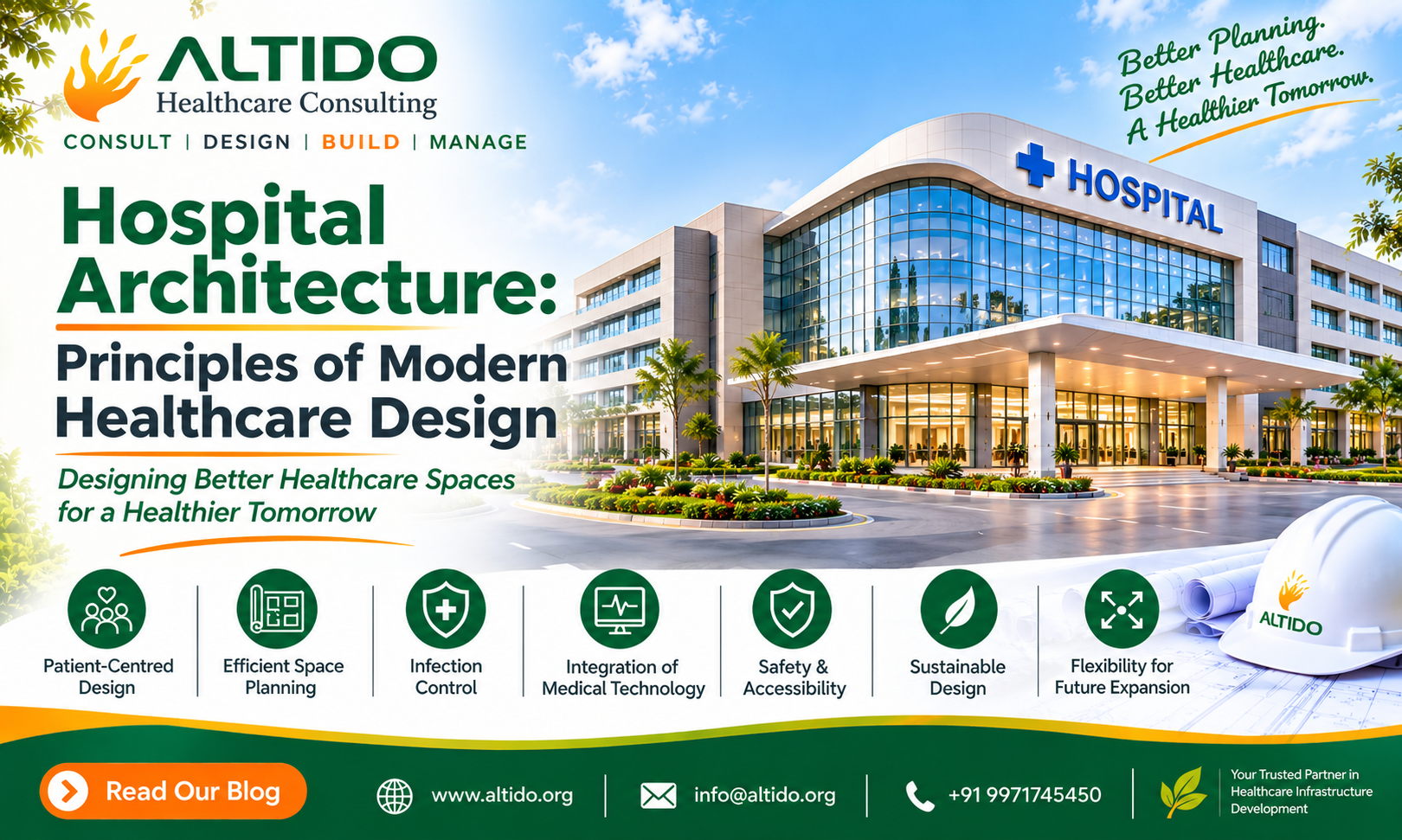
Modern healthcare facilities require more than attractive buildings. They must provide safe, efficient, accessible, and comfortable environments that support patients, healthcare professionals, and hospital operations. With advancements in medical technology and changing healthcare needs, hospital architecture has become an essential part of successful healthcare infrastructure development.
Hospital Architecture combines architectural design, clinical planning, engineering coordination, medical equipment requirements, and operational workflows to create functional healthcare environments. Every department, corridor, patient room, and support area must be carefully planned to ensure smooth hospital functioning.
ALTIDO Healthcare Consulting provides integrated healthcare planning, architectural design, engineering coordination, and project consultancy services to help healthcare investors and organizations develop modern, efficient, and future-ready hospitals.
People Also Like to read this: Healthcare & Hospital Architects in India: Designing the Future of Healthcare Infrastructure
Understanding Modern Hospital Architecture
Hospital architecture is a specialized discipline focused on designing healthcare facilities according to their clinical, technical, operational, and infrastructure requirements.
Unlike conventional commercial buildings, hospitals operate continuously and accommodate different categories of users, including patients, doctors, nurses, visitors, and support staff.
Modern healthcare design focuses on:
- Patient safety and comfort
- Efficient clinical workflows
- Infection prevention and control
- Functional departmental layouts
- Accessibility and inclusive design
- Medical equipment integration
- Energy efficiency and sustainability
- Future expansion and flexibility
A well-planned hospital creates a balance between medical functionality, architectural aesthetics, and long-term operational performance.
Key Principles of Modern Healthcare Design
1. Patient-Centred Design
Patient-centred design is one of the most important principles of modern hospital architecture. Healthcare facilities should provide a comfortable and welcoming environment that supports patient recovery and reduces unnecessary stress.
Important design considerations include:
- Comfortable patient rooms
- Clear signage and wayfinding
- Adequate natural lighting
- Proper ventilation
- Accessible toilets and circulation areas
- Convenient waiting spaces
- Privacy in consultation and treatment areas
A patient-friendly environment improves accessibility and contributes to a better healthcare experience.
2. Efficient Space Planning and Departmental Zoning
Efficient space planning ensures that hospital departments are organized according to their functional relationships and operational requirements.
Important hospital departments may include:
- Outpatient Department (OPD)
- Emergency and Trauma Care
- Inpatient Wards
- Intensive Care Units (ICUs)
- Operation Theatre Complex
- Diagnostic Imaging
- Laboratory Services
- Pharmacy
- Maternity and Paediatric Departments
- Administration and Support Services
Departmental zoning helps organize public, clinical, restricted, and service areas. Proper planning also reduces unnecessary movement and supports effective coordination between departments.
3. Infection Prevention and Control
Infection prevention is a critical consideration in healthcare architecture. Hospital layouts should support safe movement, appropriate separation of activities, and effective environmental controls.
Design strategies may include:
- Separation of clean and contaminated workflows
- Appropriate ventilation systems
- Hand hygiene stations
- Suitable isolation facilities
- Proper waste management areas
- Easy-to-maintain surface finishes
- Controlled access to restricted clinical zones
The exact requirements depend on the department, clinical services, applicable standards, and project-specific infection-control strategy.
4. Integration of Medical Technology and Equipment
Modern hospitals depend on advanced medical equipment and digital healthcare systems. Architectural planning must consider equipment requirements from the early design stages.
Equipment planning may cover:
- MRI and CT scan rooms
- Digital X-ray facilities
- Modular operation theatres
- ICU equipment
- Laboratory systems
- Medical gas pipeline systems
- Patient monitoring technology
- Hospital information systems
Each equipment installation may require specific space, electrical, structural, ventilation, shielding, and service provisions. Early coordination helps minimize design changes during construction and installation.
5. Safety, Accessibility, and Regulatory Compliance
Hospitals must provide safe environments for patients, staff, and visitors. Modern healthcare design should address fire and life safety, emergency evacuation, accessibility, structural safety, and applicable building requirements.
Planning should consider:
- Clearly identified emergency exits
- Suitable corridor and circulation widths
- Accessible entrances and facilities
- Fire detection and protection systems
- Emergency vehicle access
- Safe vertical transportation
- Appropriate signage and wayfinding
Healthcare projects in India must also consider relevant local building regulations and applicable healthcare requirements. These should be identified and coordinated during the planning and design stages.
6. Sustainable and Energy-Efficient Design
Hospitals operate for extended hours and require reliable infrastructure. Sustainable design can help improve resource efficiency while supporting a comfortable indoor environment.
Important strategies include:
- Energy-efficient lighting
- High-performance building envelopes
- Efficient HVAC systems
- Water conservation
- Rainwater harvesting where appropriate
- Waste management planning
- Renewable energy integration where feasible
- Landscape planning
Sustainability should be considered alongside clinical performance, patient comfort, maintenance requirements, and project costs.
7. Flexible Design and Future Expansion
Healthcare requirements change as populations grow, medical technologies advance, and hospitals introduce new specialties.
Flexible hospital planning allows facilities to adapt to future requirements without major disruption.
Architectural strategies may include modular planning, adaptable clinical spaces, expandable infrastructure systems, and provision for future building extensions.
Planning for flexibility at the beginning can help protect the long-term value of a healthcare project.
Importance of Hospital Feasibility Study Before Design
Before starting hospital architecture and construction, investors should evaluate the project’s feasibility.
A hospital feasibility study helps assess:
- Local healthcare demand
- Catchment area and patient demographics
- Existing healthcare facilities
- Proposed specialties and services
- Land suitability and site conditions
- Estimated project investment
- Revenue and operating cost projections
- Staffing and infrastructure requirements
The findings help determine the proposed hospital’s size, service mix, development strategy, and infrastructure requirements.
This process creates a stronger foundation for architectural planning and investment decisions.
Role of Engineering Coordination in Hospital Design
Hospital architecture must work in coordination with structural, electrical, mechanical, plumbing, fire protection, and specialized medical systems.
Key engineering components include:
- HVAC and ventilation systems
- Electrical distribution and backup power
- Plumbing and drainage
- Fire detection and firefighting systems
- Medical Gas Pipeline Systems (MGPS)
- Modular Operation Theatre systems
- Structural engineering
- IT and communication infrastructure
Coordinated engineering drawings help align technical requirements with architectural layouts and support smoother project execution.
How ALTIDO Healthcare Consulting Supports Modern Hospital Projects
ALTIDO Healthcare Consulting offers comprehensive consultancy solutions for hospital owners, healthcare investors, medical institutions, and organizations planning new healthcare facilities.
Our services include:
- Hospital Feasibility Study and Market Research
- Hospital Business Planning and Financial Modelling
- Hospital Architecture Planning and Designing
- Clinical Planning and Departmental Zoning
- Hospital Engineering Drawings Coordination
- Medical Equipment Planning
- MEP and Structural Engineering Coordination
- Interior and Landscape Design
- Project Management Consultancy
- Turnkey Healthcare Project Support
- Commissioning Management
- Hospital Renovation and Expansion Planning
From initial concept development to design coordination and project execution support, Altido helps clients align their healthcare vision with functional planning and infrastructure requirements.
Conclusion
Modern hospital architecture plays a significant role in developing efficient, safe, and patient-friendly healthcare facilities. Successful healthcare design requires careful attention to clinical workflows, departmental zoning, infection prevention, medical technology, engineering systems, sustainability, and future expansion.
By combining these principles with professional feasibility studies and integrated project planning, healthcare investors can develop hospitals that are prepared for changing medical needs.
ALTIDO Healthcare Consulting supports healthcare organizations through specialized hospital planning, architecture, engineering coordination, and project consultancy services.
Planning a new hospital or upgrading an existing healthcare facility? Connect with ALTIDO Healthcare Consulting to discuss your project requirements.