
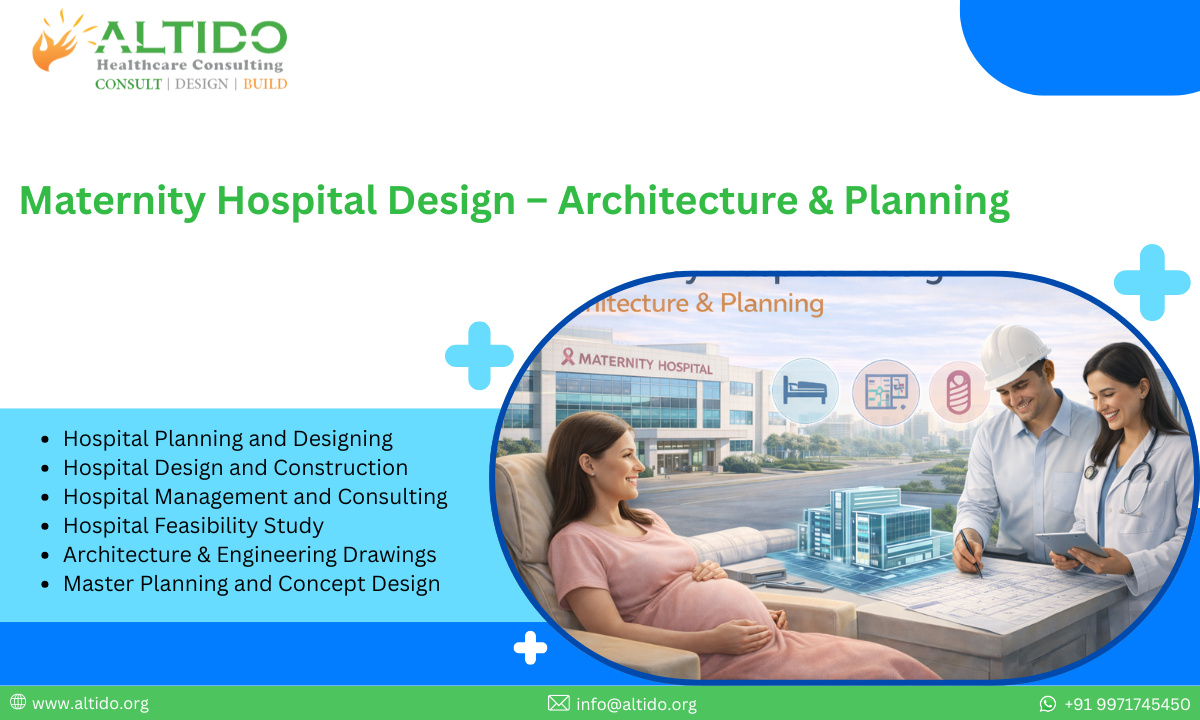
Maternity hospitals play a critical role in ensuring safe childbirth, maternal care, and neonatal support. The design and planning of a maternity hospital require a specialized approach that prioritizes safety, comfort, infection control, privacy, and operational efficiency. Unlike general hospitals, maternity facilities must provide a nurturing and reassuring environment while maintaining strict clinical standards.
At Altido Healthcare Consulting, we specialize in maternity hospital design and planning, delivering safe, patient-centric, and future-ready healthcare infrastructure that supports both mothers and newborns.
People Also Like to Read this: Expert Hospital Project Consultant in India: Delivering Successful Healthcare Infrastructure
Importance of Specialized Maternity Hospital Design
Maternity hospitals cater to antenatal care, labor and delivery, postnatal care, neonatal intensive care, and gynecology services. Proper architecture and planning directly impact clinical outcomes, patient satisfaction, and staff efficiency.
A well-designed maternity hospital ensures:
- Safe and smooth patient flow
- Quick emergency response during labor
- Infection control and hygiene
- Emotional comfort for mothers and families
- Efficient coordination between obstetrics and neonatal teams
Professional planning minimizes risks and enhances overall maternal and neonatal care quality.
Key Components of Maternity Hospital Planning
Effective maternity hospital planning focuses on functionality, privacy, and safety. The facility must be divided into clearly defined zones to maintain smooth operations.
1. Outpatient Department (OPD)
The maternity OPD includes consultation rooms, ultrasound rooms, fetal monitoring areas, and counseling spaces. It should provide privacy and comfort while ensuring efficient patient flow.
Key considerations include:
- Separate waiting areas for antenatal patients
- Easy access to diagnostic services
- Comfortable seating and calming interiors
- Clear signage and navigation
2. Labor and Delivery Suite
The labor and delivery unit is the heart of a maternity hospital. It must be designed for rapid response and patient safety.
Components include:
- Labor rooms
- Delivery rooms
- Operation Theatre (for C-sections)
- Pre-labor and recovery areas
Design considerations:
- Direct connectivity to OT and NICU
- Emergency access pathways
- Infection control materials
- Adequate lighting and ventilation
Modern maternity hospital design often includes LDR (Labor-Delivery-Recovery) rooms to enhance patient comfort and reduce patient transfers.
3. Neonatal Intensive Care Unit (NICU)
NICU planning is critical for high-risk newborn care. It requires strict infection control and advanced engineering systems.
Key design features:
- Controlled access
- Specialized HVAC systems
- Temperature and humidity control
- Neonatal equipment planning
- Clear nurse station visibility
Proximity to the labor and delivery unit is essential for emergency newborn care.
4. Postnatal Wards and Patient Rooms
Postnatal rooms should provide comfort, privacy, and emotional support to new mothers.
Room categories may include:
- General ward
- Semi-private rooms
- Private and deluxe rooms
Design elements include:
- Mother-and-baby-friendly layout
- Space for attendants
- Comfortable interiors
- Natural lighting
- Safety handrails and anti-skid flooring
Altido Healthcare Consulting focuses on patient-centric interiors that promote recovery and well-being.
Infection Control and Safety Planning
Infection prevention is a top priority in maternity hospital design.
Key infection control measures include:
- Separate clean and dirty corridors
- Proper waste management zones
- Hand hygiene stations
- Antimicrobial surface materials
- Controlled air pressure systems
Safety measures include fire safety planning, emergency exits, and medical gas systems for labor and neonatal areas.
Workflow Optimization in Maternity Hospitals
Efficient workflow planning reduces stress for staff and improves patient care.
Workflow planning includes:
- Separate patient and staff circulation
- Direct connectivity between labor room, OT, and NICU
- Efficient nurse station placement
- Quick emergency access
Proper zoning minimizes movement and ensures rapid response during emergencies.
Architectural Considerations
Maternity hospital architecture must balance clinical efficiency with emotional comfort.
Design principles include:
- Warm and soothing color schemes
- Natural light integration
- Noise reduction design
- Privacy-focused layouts
- Family-friendly waiting lounges
The environment should reduce anxiety and create a positive childbirth experience.
Engineering and Infrastructure Planning
Engineering systems play a crucial role in maternity hospital operations.
HVAC System
- HEPA filtration for critical areas
- Temperature control for NICU
- Air pressure management
Electrical Systems
- Backup power systems
- Dedicated electrical panels for critical equipment
Medical Gas Systems
- Oxygen and vacuum supply in labor and NICU
Altido Healthcare Consulting ensures engineering systems meet healthcare standards and safety norms.
Technology Integration
Modern maternity hospitals integrate advanced technology to enhance care quality.
Key technologies include:
- Hospital Information Systems (HIS)
- Fetal monitoring systems
- Neonatal monitoring systems
- Digital patient records
- Smart nurse call systems
Technology improves monitoring accuracy, documentation, and clinical coordination.
Space Planning and Capacity Planning
Capacity planning depends on projected patient volume and service scope.
Planning considerations include:
- Number of delivery rooms
- NICU bed capacity
- OPD consultation rooms
- Postnatal bed distribution
Future expansion planning is essential to accommodate growing demand.
Regulatory Compliance and Accreditation
Maternity hospitals must comply with healthcare regulations and accreditation standards such as NABH.
Compliance planning includes:
- Fire safety approval
- Biomedical waste management
- Infection control protocols
- Structural safety compliance
Altido Healthcare Consulting supports accreditation readiness and regulatory compliance.
Sustainable and Future-Ready Design
Sustainability is increasingly important in healthcare infrastructure.
Sustainable design features include:
- Energy-efficient lighting
- Water-saving systems
- Natural ventilation
- Eco-friendly materials
Future-ready design ensures flexibility for technological upgrades and expansion.
Why Choose Altido Healthcare Consulting for Maternity Hospital Design
Altido Healthcare Consulting provides comprehensive maternity hospital architecture and planning services.
Our expertise includes:
- Feasibility studies
- Master planning
- Architectural and engineering design
- Medical equipment planning
- Construction supervision
- Commissioning and operational setup
We design maternity hospitals that prioritize safety, efficiency, and patient comfort while ensuring regulatory compliance and long-term sustainability.
Conclusion
Maternity hospital design requires a specialized and patient-focused approach that integrates clinical safety, operational efficiency, and emotional comfort. From labor rooms and NICU planning to infection control and engineering systems, every detail contributes to safe childbirth and neonatal care.
Partnering with Altido Healthcare Consulting ensures your maternity hospital project is thoughtfully planned, efficiently executed, and future-ready. With expertise in healthcare architecture and planning, we help healthcare providers create safe, comfortable, and modern maternity facilities that deliver exceptional maternal and neonatal care.