
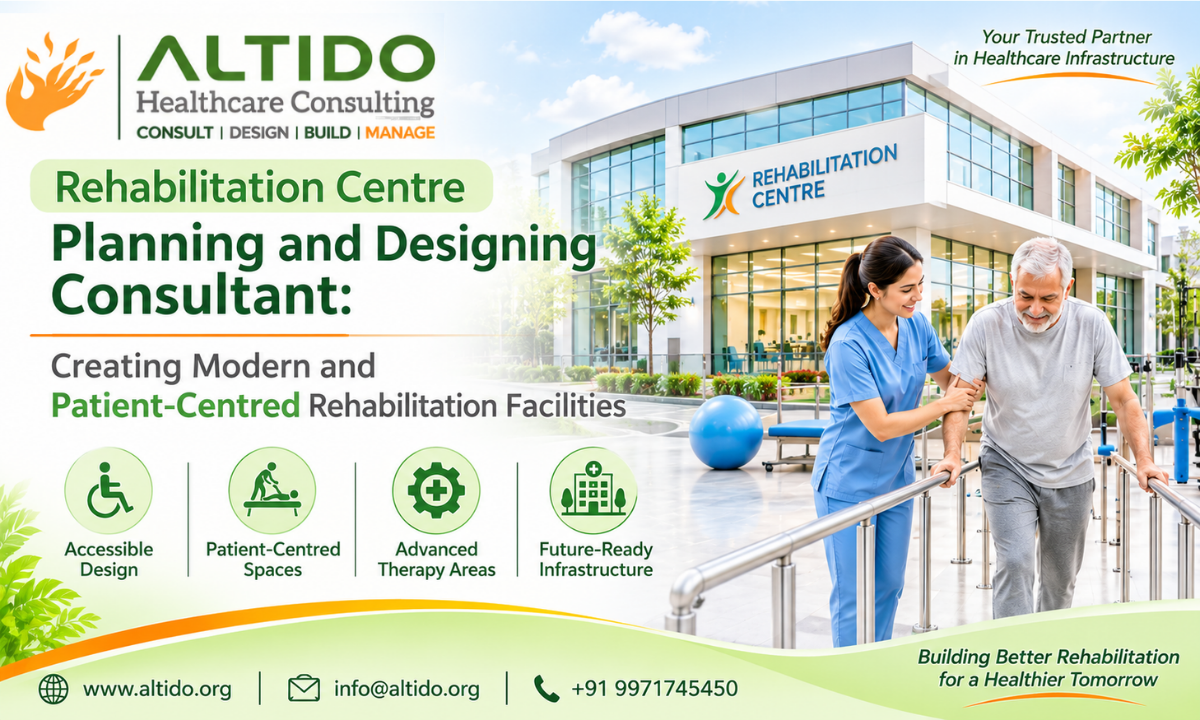
Rehabilitation centres play an important role in helping individuals recover from injuries, surgeries, neurological conditions, physical disabilities, and other medical challenges. With growing demand for specialized rehabilitation services, developing a modern and well-equipped rehabilitation centre has become an important healthcare investment opportunity.
However, establishing a successful rehabilitation facility requires more than constructing a building. It involves specialized space planning, clinical workflow design, medical equipment selection, accessibility, patient safety, and efficient operational planning.
Choosing an experienced Rehabilitation Centre Planning and Designing Consultant helps investors, healthcare providers, and medical organizations develop functional facilities that support patient recovery and long-term operational efficiency.
ALTIDO Healthcare Consulting provides comprehensive healthcare infrastructure consultancy, supporting rehabilitation projects through feasibility studies, architectural planning, clinical layouts, medical equipment planning, engineering coordination, and project management.
People Also Like to read this: Healthcare Consulting Services for New Hospital Development: A Complete Guide
1. Importance of Professional Rehabilitation Centre Planning
A rehabilitation centre has different planning requirements compared to a conventional hospital. Its design must support physical therapy, occupational therapy, neurological rehabilitation, patient mobility, assisted movement, and specialized treatment activities.
Professional rehabilitation centre planning focuses on:
- Patient-friendly and accessible layouts
- Functional therapy and treatment spaces
- Safe patient movement and circulation
- Proper equipment placement
- Privacy and comfortable recovery environments
- Accessible toilets and changing facilities
- Indoor and outdoor rehabilitation areas
- Efficient staff and patient workflows
- Future expansion opportunities
A well-planned rehabilitation facility creates an environment that supports treatment activities, patient independence, and efficient healthcare delivery.
2. ALTIDO – Your Rehabilitation Centre Planning and Designing Consultant
ALTIDO Healthcare Consulting offers integrated consultancy services for new rehabilitation centres, healthcare expansions, and specialized medical facilities.
Our approach combines healthcare architecture, clinical planning, engineering coordination, medical equipment requirements, and project management.
Our key services include:
- Rehabilitation Centre Feasibility Studies
- Market Research and Due Diligence
- Business Planning and Financial Assessment
- Architectural Planning and Master Planning
- Clinical Planning and Departmental Zoning
- Therapy Area and Treatment Room Design
- Medical Equipment Planning
- MEP and Structural Engineering Coordination
- Interior and Landscape Design
- Project Management Consultancy
- Turnkey Healthcare Solutions
- Commissioning Management
Whether you are planning a standalone rehabilitation centre or a specialized department within a multispecialty hospital, ALTIDO can support your project requirements.
3. Types of Rehabilitation Centres and Their Planning Requirements
Different rehabilitation facilities require different layouts, equipment, and clinical arrangements.
Physical Rehabilitation Centre: Designed for patients recovering from injuries, surgeries, musculoskeletal conditions, and mobility limitations. It requires physiotherapy areas, exercise spaces, treatment rooms, and rehabilitation equipment.
Neurological Rehabilitation Centre: Supports patients recovering from stroke, brain injuries, spinal cord injuries, and neurological conditions. Planning may include specialized therapy rooms, assisted mobility areas, and functional assessment spaces.
Occupational Therapy Centre: Requires spaces for daily living activities, functional training, hand therapy, and rehabilitation exercises.
Paediatric Rehabilitation Centre: Designed for children requiring developmental, physical, and occupational therapy. It should provide child-friendly treatment areas and appropriate safety features.
Cardiac Rehabilitation Centre: Requires supervised exercise areas, consultation rooms, monitoring facilities, and patient education spaces.
Comprehensive Rehabilitation Hospital: Combines inpatient and outpatient rehabilitation services with diagnostic support, therapy departments, nursing facilities, and specialized treatment areas.
The facility’s design should be customized according to its intended services, patient population, and operational model.
4. Important Departments in Rehabilitation Centre Design
A comprehensive rehabilitation facility may include several specialized departments depending on its capacity and service offerings.
Reception and Waiting Area: A welcoming entrance with convenient registration, seating, accessible circulation, and patient guidance.
Physiotherapy Department: Dedicated spaces for exercise therapy, mobility training, stretching, strengthening, and therapeutic equipment.
Occupational Therapy Department: Functional spaces for activities of daily living, coordination exercises, hand therapy, and independence training.
Neurological Rehabilitation: Specialized treatment areas for balance training, gait rehabilitation, coordination, and assisted movement.
Speech and Language Therapy: Quiet consultation and treatment rooms for communication and swallowing assessments.
Hydrotherapy Area: Where included, a specially designed pool and supporting facilities with accessibility, safety, and water-management provisions.
Consultation and Assessment Rooms: Spaces for doctors, rehabilitation specialists, therapists, and clinical assessments.
Inpatient Rehabilitation Wards: Patient rooms, nursing stations, accessible bathrooms, and supporting clinical facilities for centres offering residential care.
Diagnostic and Support Services: Additional facilities such as imaging, laboratory services, pharmacy, and administration according to the project scope.
5. Architectural Planning and Accessibility
Accessibility is one of the most important aspects of rehabilitation centre architecture.
Patients may have limited mobility and require wheelchairs, walking aids, assisted transfers, and specialized support.
Important architectural considerations include:
- Barrier-free entrances
- Accessible ramps and lifts
- Wide circulation corridors
- Wheelchair-friendly treatment spaces
- Accessible toilets and changing rooms
- Suitable handrails and support systems
- Non-slip flooring
- Clear signage and wayfinding
- Adequate natural lighting
- Safe indoor and outdoor movement areas
The architectural design should follow applicable accessibility, building safety, and healthcare regulations.
6. Medical Equipment Planning for Rehabilitation Centres
Rehabilitation equipment plays an important role in the functionality of the facility. Equipment requirements should be identified during the planning and design stage.
Depending on the centre’s specialties, equipment may include:
- Physiotherapy treatment tables
- Parallel bars
- Treadmills and exercise cycles
- Gait training equipment
- Balance and coordination equipment
- Electrotherapy equipment
- Occupational therapy equipment
- Neurological rehabilitation systems
- Hydrotherapy equipment
- Patient mobility and transfer aids
ALTIDO supports equipment planning, layout coordination, space requirements, utility provisions, and equipment scheduling to ensure that departments are appropriately designed.
7. Engineering and Infrastructure Planning
Rehabilitation centres require reliable building infrastructure to support patient care and specialized treatment activities.
Important engineering considerations include:
- HVAC and ventilation systems
- Electrical distribution and backup power
- Plumbing and drainage
- Fire detection and protection
- Structural engineering
- Water treatment systems for hydrotherapy, where applicable
- Communication and healthcare IT infrastructure
- Specialized equipment connections
Proper coordination between architecture, engineering, and equipment planning helps minimize design conflicts and supports long-term building performance.
8. Feasibility Study and Business Planning
Before establishing a rehabilitation centre, investors should evaluate its financial and operational feasibility.
A comprehensive feasibility study helps determine whether the proposed project is suitable for its location, target patient population, and investment objectives.
Important considerations include:
- Healthcare market demand
- Existing rehabilitation facilities and competition
- Proposed treatment specialties
- Patient catchment analysis
- Project capacity and space requirements
- Land and building assessment
- Construction and equipment costs
- Staffing requirements
Revenue and operating cost projections - Investment and financial planning
A structured business plan helps investors understand project requirements and make informed decisions before committing significant capital.
9. Why Choose ALTIDO Healthcare Consulting?
ALTIDO Healthcare Consulting provides integrated healthcare infrastructure consultancy for investors, healthcare organizations, developers, and medical professionals.
Our multidisciplinary approach connects feasibility studies, architecture, clinical planning, medical equipment, engineering coordination, and project management.
Our key strengths include:
- Comprehensive healthcare project consultancy
- Specialized hospital and rehabilitation facility planning
- Clinical layouts and departmental zoning
- Medical equipment planning support
- Architectural and engineering coordination
- Feasibility studies and business planning
- Project management and turnkey solutions
- Focus on functional and patient-centred infrastructure
Our objective is to help clients develop efficient, accessible, and future-ready healthcare facilities.
Conclusion
Developing a successful rehabilitation centre requires careful planning, specialized architecture, clinical understanding, accessibility, and appropriate medical equipment integration.
Selecting an experienced Rehabilitation Centre Planning and Designing Consultant helps investors establish facilities that support patient recovery, clinical efficiency, and sustainable healthcare operations.
ALTIDO Healthcare Consulting offers comprehensive rehabilitation centre planning, architectural design, feasibility studies, clinical layouts, medical equipment planning, engineering coordination, and project management consultancy.
Planning a new rehabilitation centre or expanding an existing healthcare facility? Connect with ALTIDO Healthcare Consulting to discuss your project requirements.