
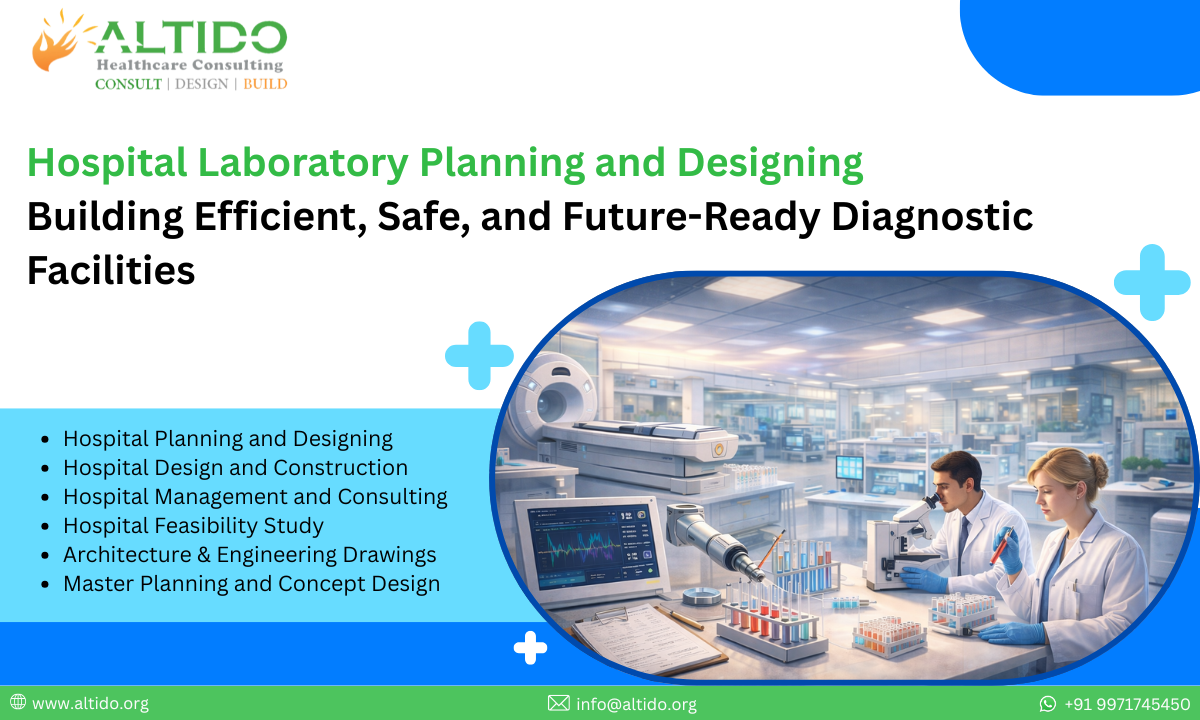
Laboratories are the backbone of modern healthcare. Nearly 70% of medical decisions depend on laboratory results, making diagnostic accuracy and efficiency critical to patient outcomes. Proper Hospital Laboratory Planning and Designing ensures that laboratories operate safely, efficiently, and in compliance with regulatory standards.
At Altido Healthcare Consulting, we specialize in integrated Hospital Design and Planning solutions, including advanced laboratory infrastructure tailored to the needs of multi-speciality hospitals, super-speciality centers, and standalone diagnostic facilities.
People Also Like to read this: Heart Hospital Design and Planning: Creating Advanced Cardiac Care Facilities
The Importance of Hospital Laboratory Planning and Designing
Hospital laboratories are complex technical environments that must balance precision, biosafety, workflow efficiency, and regulatory compliance. Poor planning can lead to:
- Sample contamination
- Workflow bottlenecks
- Increased turnaround time
- Staff fatigue
- Safety hazards
Effective Hospital Laboratory Planning and Designing creates optimized layouts that enhance accuracy, safety, and operational productivity.
Key Components of a Hospital Laboratory
A well-designed hospital laboratory typically includes:
- Sample collection areas
- Hematology laboratory
- Biochemistry laboratory
- Microbiology laboratory
- Histopathology laboratory
- Blood bank
- Molecular diagnostics lab
- Storage and waste disposal areas
Each department requires careful zoning and specialized infrastructure.
Zoning and Workflow Optimization
Efficient zoning is central to both Hospital Laboratory Planning and Designing and overall hospital performance.
1. Clear Functional Zoning
Laboratory areas must be divided into:
- Pre-analytical zone (sample collection and preparation)
- Analytical zone (testing and processing)
- Post-analytical zone (reporting and storage)
Proper segregation prevents cross-contamination and improves workflow efficiency.
2. Controlled Access
Access to laboratory spaces must be restricted to authorized personnel. Entry points should include:
- Changing areas
- Handwashing stations
- PPE storage
This enhances biosafety compliance.
Role of Hospital Architects in Laboratory Design
Experienced Hospital Architects understand that laboratory planning goes beyond room layout. It requires integration of architecture, engineering, and medical workflow systems.
Hospital architects are responsible for:
- Space allocation and optimization
- Structural planning for heavy lab equipment
- Ventilation and air pressure control
- Utility planning
- Compliance with NABH and biosafety norms
At Altido Healthcare Consulting, our team of healthcare-focused architects ensures that laboratory infrastructure aligns with global standards.
Infrastructure Requirements in Laboratory Planning
Hospital laboratories demand highly specialized infrastructure.
HVAC and Airflow Control
Air handling systems must:
- Maintain controlled air pressure
- Provide adequate air changes per hour
- Prevent contamination spread
- Maintain temperature stability
Microbiology and molecular labs require negative pressure systems to contain pathogens.
Electrical and Backup Systems
Laboratories rely on uninterrupted power for analyzers and refrigeration systems. Backup generators and UPS systems are essential.
Plumbing and Drainage
Specialized plumbing systems must handle chemical waste safely and comply with biomedical waste management guidelines.
Biosafety and Infection Control Measures
Safety is the foundation of Hospital Laboratory Planning and Designing.
Essential Biosafety Measures:
- Seamless, chemical-resistant flooring
- Easy-to-clean wall finishes
- Proper waste segregation areas
- Eye wash stations and emergency showers
- Fume hoods and biosafety cabinets
These measures protect both laboratory staff and hospital patients.
Space Planning for Efficiency and Accuracy
Laboratory design must minimize unnecessary movement while supporting accurate testing.
Key considerations include:
- Linear workflow design
- Adequate counter space
- Proper equipment spacing
- Ergonomic workstation design
- Separate storage for reagents and samples
As part of integrated Hospital Design and Planning, Altido ensures laboratory layouts align with hospital circulation and diagnostic workflows.
Integration with Hospital Operations
Laboratories must connect seamlessly with:
- Emergency departments
- Operation theatres
- Intensive care units
- OPD departments
Efficient sample transport systems—manual or pneumatic—reduce turnaround time and improve patient care quality.
Technology Integration and Automation
Modern laboratories increasingly use automation and digital reporting systems.
Advanced features include:
- Automated sample processing systems
- Laboratory Information Management Systems (LIMS)
- Barcoding and tracking systems
- Smart storage solutions
Our expertise in Hospital Laboratory Planning and Designing ensures infrastructure supports current and future technological upgrades.
Designing Specialized Laboratory Areas
Different laboratory types require customized design approaches.
Microbiology Laboratory
- Negative pressure rooms
- Controlled entry
- Specialized ventilation
Blood Bank
- Temperature-controlled storage
- Secure access systems
- Proper donor flow management
Molecular Diagnostics Lab
- Strict contamination control
- Dedicated pre-PCR and post-PCR areas
Each laboratory type demands precision planning by experienced Hospital Architects.
Regulatory Compliance and Accreditation
Laboratories must comply with:
- NABH standards
- Biomedical waste management rules
- Fire safety norms
- Occupational safety regulations
Altido Healthcare Consulting ensures that laboratory designs meet all required regulatory frameworks during the Hospital Design and Planning process.
Sustainability in Laboratory Design
Sustainable design reduces operational costs and environmental impact.
Strategies include:
- Energy-efficient lighting
- Water-saving fixtures
- Smart HVAC controls
- Durable, low-maintenance materials
Sustainable laboratory infrastructure ensures long-term cost efficiency.
Why Choose Altido Healthcare Consulting?
Altido Healthcare Consulting is a trusted partner for comprehensive Hospital Design and Planning solutions.
Our Strengths:
- Specialized healthcare architectural expertise
- Integrated laboratory and clinical planning
- Compliance-driven approach
- Efficient workflow optimization
- Future-ready infrastructure solutions
Our experience in Hospital Laboratory Planning and Designing ensures that every diagnostic facility we design supports precision, safety, and operational excellence.
Conclusion
Hospital laboratories are mission-critical components of healthcare infrastructure. Effective Hospital Laboratory Planning and Designing requires deep technical knowledge, workflow expertise, and regulatory understanding. From biosafety to automation, every detail must be carefully coordinated.
With professional guidance from experienced Hospital Architects and healthcare planners at Altido Healthcare Consulting, hospitals can build diagnostic facilities that are safe, efficient, compliant, and prepared for the future of healthcare.