
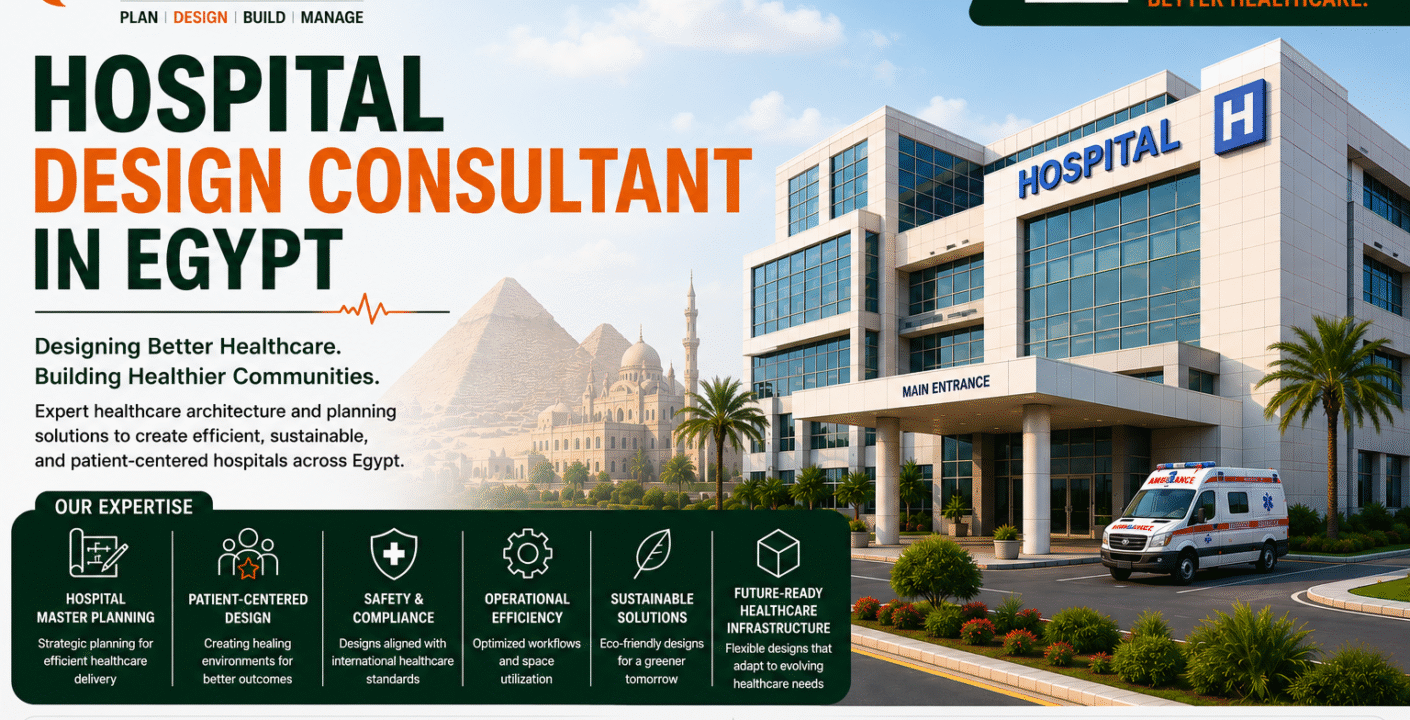
The healthcare sector in Egypt is undergoing significant transformation with increasing demand for modern hospitals, specialized medical facilities, and improved healthcare infrastructure. As patient expectations rise and medical technology continues to advance, healthcare organizations require expert guidance to design hospitals that are efficient, sustainable, and patient-focused.
A professional Hospital Design Consultant in Egypt plays a crucial role in developing healthcare facilities that combine advanced architecture, functional planning, modern technology, and operational efficiency.
Altido Healthcare Consulting provides specialized healthcare architecture, hospital planning, and infrastructure consulting solutions to help healthcare providers create world-class medical facilities designed for current and future healthcare needs.
People Also Like to read this: Hospital Architecture Design & Planning: Creating Future-Ready Healthcare Facilities
Importance of Hospital Design Consulting in Egypt
A hospital is a complex environment where architecture directly impacts patient care, staff productivity, and operational success.
Unlike traditional buildings, hospitals require detailed planning for:
- Clinical workflows
- Patient movement
- Emergency response
- Infection prevention
- Medical equipment integration
- Healthcare technology
- Future expansion
Professional hospital design consultants ensure every space is planned according to healthcare requirements.
What Does a Hospital Design Consultant Do?
A hospital design consultant provides complete support from concept development to project completion.
Key responsibilities include:
- Healthcare feasibility studies
- Hospital master planning
- Architectural design
- Department planning
- Space optimization
- Medical equipment planning
- MEP coordination
- Operational planning
- Project management support
The goal is to create hospitals that provide safe, efficient, and high-quality healthcare services.
Hospital Planning and Architecture in Egypt
Successful hospital projects begin with detailed planning.
Hospital planning includes understanding:
- Healthcare demand
- Patient capacity
- Medical specialties
Site conditions - Operational requirements
- Future growth possibilities
A well-planned healthcare facility improves workflow and ensures better utilization of resources.
Hospital Master Planning
Master planning creates a long-term development roadmap for healthcare facilities.
It includes:
Site Planning
Site planning considers:
- Main entrances
- Emergency access
- Ambulance routes
- Parking areas
- Service access
Building Zoning
Hospitals are divided into functional zones such as:
Public Areas
Includes:
- Reception
- Waiting areas
- Registration
- Cafeteria
- Pharmacy
Clinical Areas
Includes:
- OPD
- Emergency
- ICU
- Operation Theatre
- Diagnostic departments
Support Areas
Includes:
- Kitchen
- Laundry
- Stores
- Maintenance
- Waste management
Proper zoning improves efficiency and safety.
Patient-Centered Hospital Design
Modern hospital design focuses on improving patient experience.
A patient-friendly hospital includes:
- Comfortable waiting areas
- Easy navigation
- Privacy-focused rooms
- Accessible facilities
- Healing environments
Good architecture supports emotional well-being and improves the overall healthcare experience.
Department-Wise Hospital Design Planning
Each department requires specialized planning.
Outpatient Department (OPD)
OPD design focuses on:
- Smooth patient registration
- Consultation rooms
- Waiting management
- Doctor accessibility
Efficient OPD planning reduces crowding and improves service delivery.
Emergency Department Design
Emergency departments require fast response and accessibility.
Important features include:
- Dedicated ambulance entry
- Emergency treatment rooms
- Trauma care areas
- Quick diagnostic access
Emergency planning helps medical teams respond effectively during critical situations.
Operation Theatre Planning
Operation Theatre areas require controlled environments.
Planning includes:
- Sterile zones
- Surgical rooms
- Pre-operative areas
- Recovery spaces
- Equipment storage
Proper OT design supports infection control and surgical efficiency.
ICU Design Planning
ICU spaces require specialized healthcare infrastructure.
Important considerations:
- Patient monitoring
- Medical gas systems
- Nursing visibility
- Infection prevention
- Emergency accessibility
Effective ICU planning supports critical care delivery.
Medical Equipment Planning
Modern hospitals depend on advanced medical technology.
Hospital consultants coordinate spaces for:
- MRI
- CT Scan
- X-Ray
- Laboratory equipment
- Cath labs
- Advanced surgical systems
Proper equipment planning ensures smooth installation and operation.
Healthcare Infrastructure Design
Healthcare infrastructure requires strong coordination between architecture and engineering systems.
Important components include:
HVAC Systems
Hospitals require specialized ventilation systems for:
- Infection control
- Air quality
- Temperature management
Electrical Systems
Planning includes:
- Backup power
- Medical equipment supply
- Emergency systems
Plumbing and Medical Gas Systems
Includes:
- Oxygen supply
- Water systems
- Drainage networks
Integrated infrastructure planning improves hospital reliability.
Smart Hospital Design in Egypt
Technology is transforming healthcare delivery.
Modern hospitals integrate:
- Digital patient systems
- Smart building automation
- Electronic medical records
- Telemedicine infrastructure
- Automated workflows
Smart hospital design improves efficiency and prepares facilities for future healthcare demands.
Sustainable Hospital Architecture
Sustainable healthcare design focuses on reducing environmental impact.
Green hospital strategies include:
- Energy-efficient buildings
- Solar solutions
- Water conservation
- Sustainable materials
- Waste management
Sustainable hospitals reduce operational costs and support environmental goals.
Hospital Expansion and Future Planning
Healthcare requirements continue to evolve.
Future-ready hospital design allows:
- Additional departments
- Increased bed capacity
- Technology upgrades
- Service expansion
Flexible planning protects investment and improves long-term value.
Challenges in Hospital Design Projects
Hospital projects may face challenges including:
- Limited space
- Budget constraints
- Complex healthcare requirements
- Changing technology
- Operational demands
Experienced healthcare consultants help overcome these challenges through strategic planning.
Why Choose Altido Healthcare Consulting?
Altido Healthcare Consulting is a trusted healthcare consulting company providing complete hospital design and planning solutions.
Our services include:
- Hospital feasibility studies
- Healthcare architecture
- Hospital master planning
- Space planning
- Medical equipment planning
- Healthcare infrastructure consulting
- Operational planning
Altido combines healthcare expertise with architectural innovation to create efficient and future-ready medical facilities.
Future of Hospital Design in Egypt
The future of healthcare infrastructure in Egypt will focus on:
- Advanced specialty hospitals
- Smart healthcare facilities
- Digital healthcare solutions
- Sustainable designs
- Patient-centered environments
Hospitals designed today must support tomorrow’s healthcare challenges.
Conclusion
A successful healthcare facility requires more than architectural design—it requires a deep understanding of healthcare operations, technology, patient needs, and future growth.
A professional Hospital Design Consultant in Egypt helps healthcare organizations transform ideas into efficient, safe, and advanced medical facilities.
With expertise in healthcare planning, architecture, and infrastructure solutions, Altido Healthcare Consulting supports hospitals in creating modern healthcare environments that improve patient care and operational performance.