
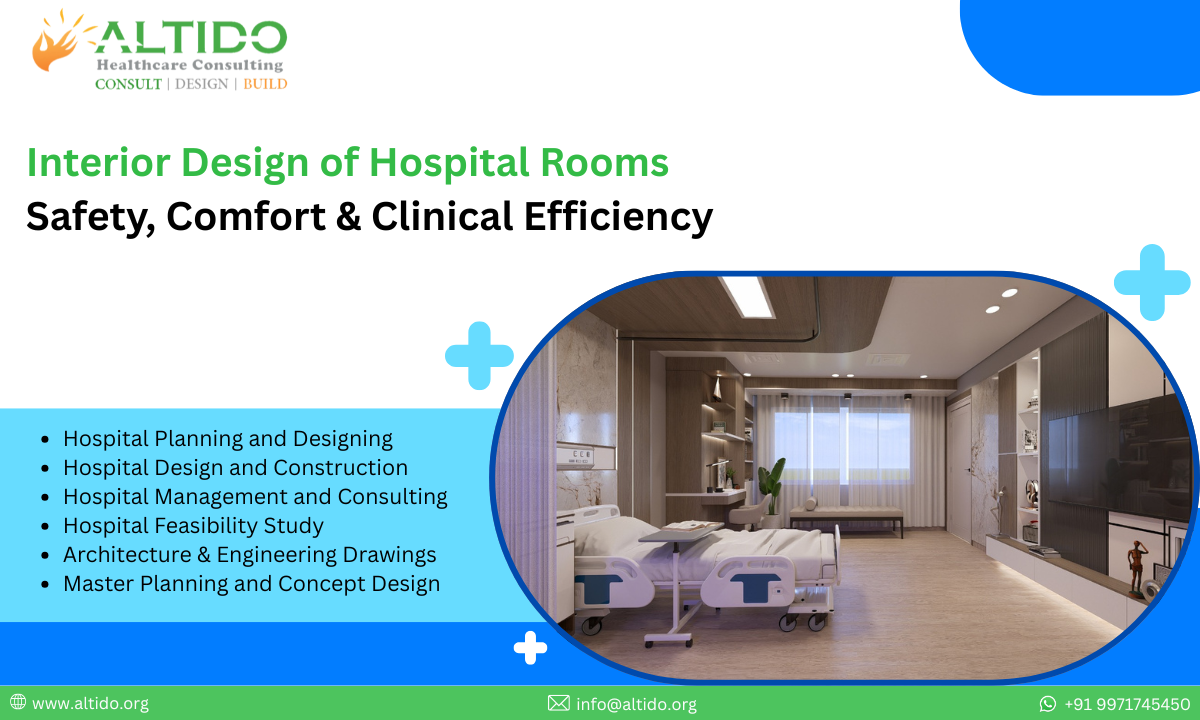
In modern healthcare, the interior design of hospital rooms plays a critical role in patient outcomes, staff efficiency, and overall care quality. A thoughtfully designed hospital room goes beyond aesthetics—it becomes a healing environment that supports patient safety, comfort, emotional well-being, and seamless clinical operations. At Altido Healthcare Consulting, we specialize in creating hospital interiors that balance clinical functionality with human-centered design principles, ensuring spaces that heal, protect, and perform.
People Also Like to read this: Smart Hospital Design and Planning: Building the Future of Healthcare
The Importance of Well-Designed Hospital Rooms
Hospital rooms are where patients spend the majority of their care journey. Poorly planned interiors can lead to increased infection risks, staff inefficiencies, patient discomfort, and safety hazards. Conversely, well-designed rooms improve recovery times, reduce stress, minimize medical errors, and enhance staff productivity.
Modern hospital interior design must address four core pillars:
- Patient Safety
- Comfort
- Convenience
- Clinical Functionality
Each of these elements must be integrated seamlessly to deliver a truly effective healing environment.
Patient Safety as the Foundation of Design
Patient safety is the most critical aspect of hospital room interior design. Every design decision—from flooring materials to furniture placement—must reduce risks and support safe care delivery.
Infection Control
Hospital rooms must be designed to minimize the spread of infections. This includes:
- Use of antimicrobial and non-porous materials
- Seamless flooring and wall finishes to prevent bacterial buildup
- Hands-free fixtures for taps, doors, and dispensers
- Clearly defined clean and dirty zones
Single-patient rooms are increasingly preferred, as they reduce cross-contamination and provide better infection control compared to shared rooms.
Fall Prevention and Injury Reduction
Falls are among the most common hospital safety incidents. Interior design can significantly reduce this risk by:
- Installing non-slip flooring
- Providing adequate lighting without glare
- Ensuring clear, obstruction-free pathways
- Positioning handrails and grab bars near beds and bathrooms
Bed height adjustability and safe furniture design further enhance patient safety.
Enhancing Patient Comfort and Healing
A hospital room should feel less institutional and more reassuring. Comfort plays a direct role in patient recovery, mental well-being, and satisfaction.
Healing Environment and Aesthetics
Color psychology, natural light, and visual comfort are essential. Soft, calming colors, artwork, and views of nature help reduce anxiety and stress. Large windows that allow daylight and outdoor views support circadian rhythms and faster healing.
Acoustic Comfort
Noise control is vital in hospital rooms. Excessive noise disrupts sleep and increases stress levels. Design strategies include:
- Acoustic ceiling panels
- Sound-absorbing wall finishes
- Quiet HVAC systems
- Proper door and window insulation
Thermal and Lighting Comfort
Patients should have control over their environment. Adjustable lighting, bedside controls, and personalized temperature settings improve comfort and empower patients during their stay.
Convenience for Patients and Caregivers
Hospital room design must support both patients and their caregivers by simplifying daily activities and reducing unnecessary movement.
Patient-Centric Layout
Key elements such as call buttons, bedside tables, power outlets, and lighting controls should be within easy reach of the patient. Clear signage and intuitive room layouts reduce confusion, especially for elderly or mobility-impaired patients.
Family and Attendant Accommodation
Family involvement in care improves outcomes. Modern hospital rooms often include:
- Comfortable visitor seating or sleeper sofas
- Charging points and small work surfaces
- Storage for personal belongings
These features help families stay engaged without compromising clinical workflows.
Supporting Clinical Functionality and Staff Efficiency
A hospital room must function efficiently for doctors, nurses, and support staff. Poorly designed rooms increase fatigue, errors, and response times.
Efficient Workflow Design
The room layout should support smooth clinical workflows by:
- Positioning medical equipment close to the point of care
- Separating patient, staff, and supply zones
- Ensuring unobstructed access to the bed from multiple sides
At Altido Healthcare Consulting, we focus on evidence-based layouts that reduce staff travel distances and improve response efficiency.
Integrated Medical Equipment
Hospital rooms must accommodate modern medical technologies without appearing cluttered. Wall-mounted systems, headwall units, concealed wiring, and modular furniture help maintain a clean, organized environment.
Technology integration may include:
- Patient monitoring systems
- Medical gas outlets
- Nurse call systems
- Digital health displays
Universal Design and Accessibility
Hospital rooms must be inclusive and accessible to patients of all abilities. Universal design ensures ease of use for elderly patients, children, and individuals with disabilities.
Key accessibility considerations include:
- Wider doorways for wheelchairs and beds
- Barrier-free bathrooms
- Adjustable fixtures and furniture
- Clear visual contrast for the visually impaired
Designing for accessibility improves safety and dignity while complying with healthcare regulations and standards.
Sustainability and Long-Term Performance
Sustainable hospital interiors reduce operating costs and support environmental responsibility. Energy-efficient lighting, durable materials, and low-VOC finishes improve indoor air quality and long-term performance.
Altido Healthcare Consulting integrates sustainability into hospital room design by selecting materials and systems that are durable, easy to maintain, and environmentally responsible.
Altido Healthcare Consulting’s Approach
At Altido Healthcare Consulting, we take a holistic approach to hospital interior design. Our multidisciplinary expertise combines architecture, engineering, clinical planning, and human-centered design. We align every hospital room design with regulatory standards, operational efficiency, and patient experience goals.
Our design solutions are:
- Patient-focused and safety-driven
- Clinically efficient and future-ready
- Aesthetically calming and functional
- Customized to each healthcare facility’s vision and needs
Conclusion
The interior design of hospital rooms is a critical component of modern healthcare delivery. By thoughtfully integrating patient safety, comfort, convenience, and clinical functionality, hospitals can create environments that promote healing, reduce risks, and improve operational efficiency.
With expert planning and design support from Altido Healthcare Consulting, healthcare providers can transform hospital rooms into safe, compassionate, and high-performing spaces that truly support patient care—today and in the future.